Welcome to Biomedon Magazine!

We are honored to present you with this content and hope this will inspire you for your essential research in the Biomedical area.

We understand the importance of staying ahead of the curve in the biomedical field. That’s why our company is dedicated to developing and refining innovative technologies that can make a difference in your research. Our solutions are designed to change how you think about research, providing the tools you need to make game-changing discoveries and improve your competitiveness.

Here at Biomedon, we specialize in custom engineering research instrument development that caters to your unique requirements. Our teams of highly skilled engineers, scientists, and experts are dedicated to using cutting-edge technologies to develop innovative laboratory and research equipment.

Achieving breakthroughs is not a simple task. However, with our top-of-the-line solutions, you will have the most efficient and effective tools to make groundbreaking discoveries and stay competitive.

By partnering with us, you can be confident that you will gain access can access the best research instruments and tools to facilitate game-changing discoveries in your field.

Thank you for choosing Biomedon Magazine as your go-to research insight and inspiration.
Magnetic Micro-Pumps for Wearable and Implantable Fluid Handling

Article

Fabrication, Characterization, and Biocompatibility Evaluation

Centrifugal pumps are one of the most common mechanical systems used to transport liquids in various industries, homes, medical applications, and scientific research. These pumps are renowned for providing continuous flow and managing large volumes of fluids with high rotation velocities, high flow rates, and low maintenance needs. More than 80 percent of global pump production consists of centrifugal pumps.

Numerous biomedical systems, such as ventricular assist devices, extracorporeal membrane oxygenation machines, and dialysis machines, rely on centrifugal pumps to provide continuous and quantified blood, nutrients, and insulin flows to millions of patients with cardiovascular and chronic kidney diseases. However, these pumps comprise mechanically rigid components, including magnetically propelled rotors and shaft-mounted impellers. Consequently, they are significantly heavier and larger than many diaphragm-based pumps, the miniaturization of which has already been achieved through the efforts of numerous researchers.

The development of wearable and diminutive centrifugal compressors has been a continuing obstacle. Nevertheless, centrifugal pumps’ miniaturization and weight reduction are very alluring in terms of their capacity to manage large volumes of fluids for wearable applications. Miniaturization is essential for implantable devices, where size and weight constraints are paramount.

Soft materials and flexible electronics have been investigated as potential solutions to the miniaturization challenge. Despite numerous demonstrations in skin patches, soft robots, and implantable devices, the fabrication of conventional mechanical pumps with soft materials has been rare, let alone a rotationally flexible structure for fluid delivery in a liquid environment.

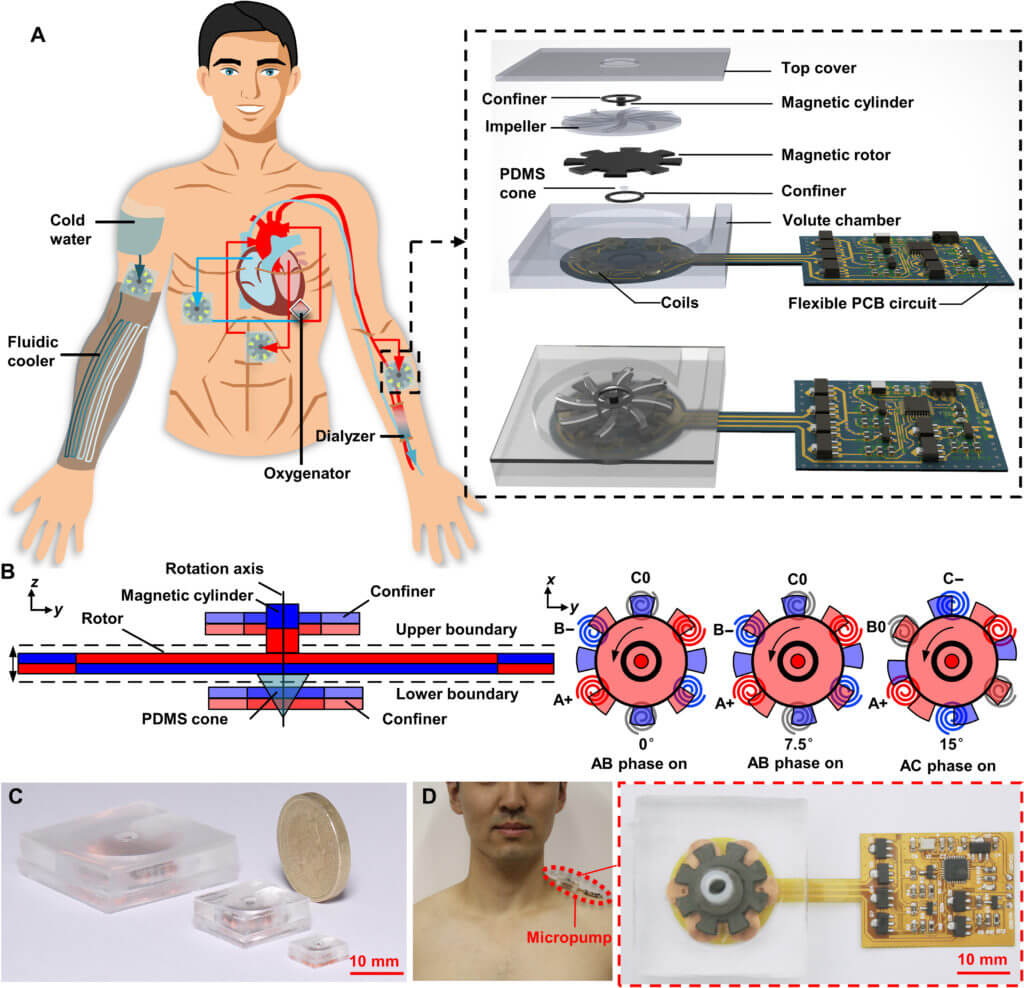
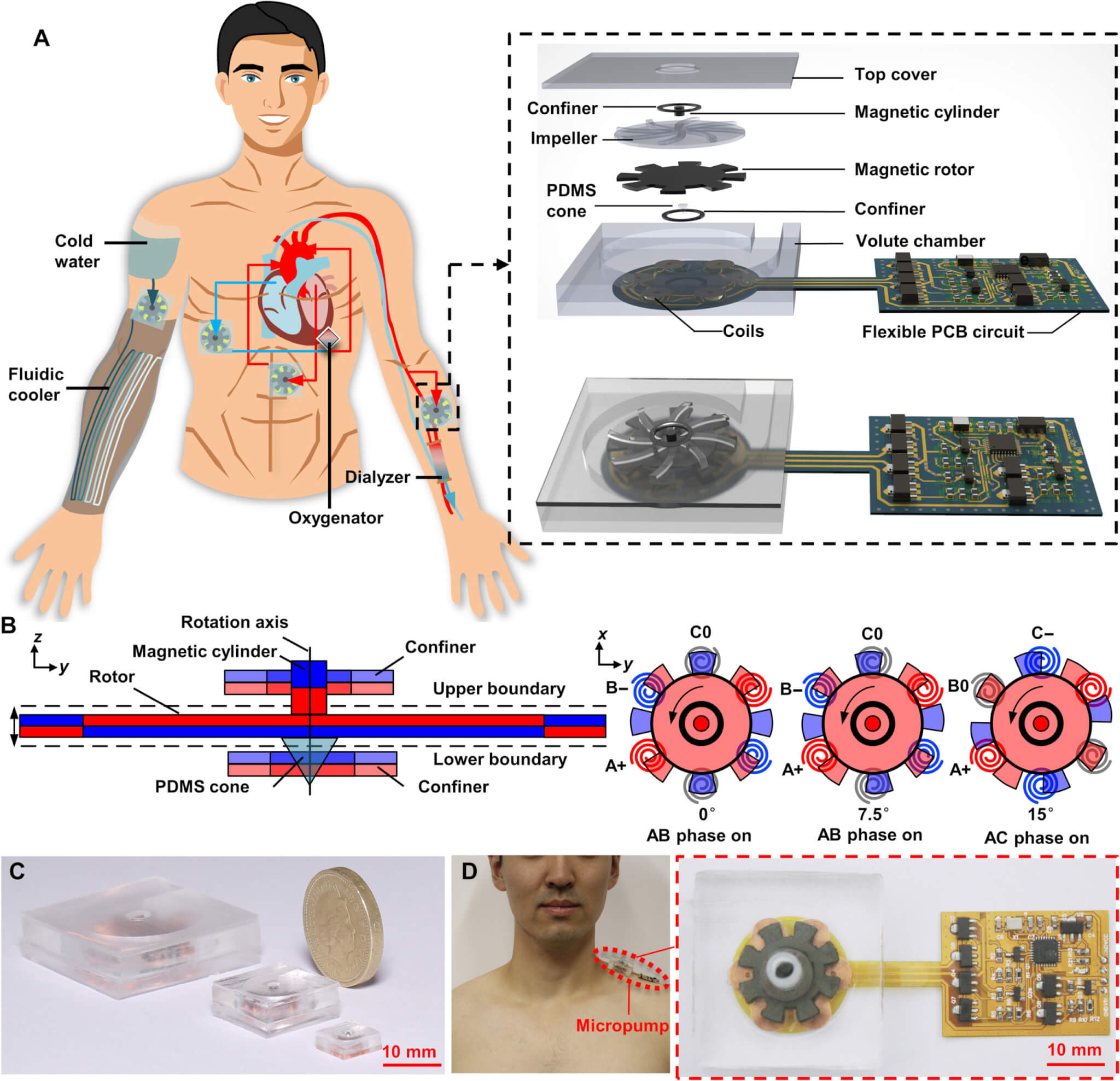
Soft magnetic levitation micropumps (SMLMs) have recently been developed for wearable and implantable applications. SMLMs are the tiniest and lightest centrifugal pumps suitable for wearable and implantable applications due to the use of soft materials. The SMLMs consist of a unibody magnetic rotor and silicone impeller that are powered electromagnetically via a flexible printed circuit board (PCB) circuit. Additional magnetic membranes are incorporated into the pumps to confine the position and rotation of the impellers via magnetic levitation, allowing for a shaftless design and abrasion-free operation.

SMLMs have several distinctive characteristics. They range in weight from 0.3 to 12.8 grams and in size from 0.3 to 11.7 centimeters three, with a rotation speed of up to 1000 revolutions per minute and a flow rate of 30.6 ml/min at a water-level difference of 0 millimeters at an operating temperature of fewer than 37 degrees Celsius. 1 to 6 centipoise (cP) viscosity liquids have been pumped with these pumps. The devices have been shown to assist with dialysis, blood circulation, and cutaneous temperature regulation.

In addition, the SMLMs have been implanted in rats for more than 30 days, and the results indicate that they are biocompatible and do not cause organ harm. The novel levitation design of the SMLMs eliminates friction force and mechanical wear by preventing direct contact between impellers and surrounding structures.

The development of SMLMs indicates the potential to replace mechanically rigid and rotational components with flexible materials and circuits and the possibility of achieving fully adjustable artificial organs to revolutionize healthcare and enhance patients’ health. The SMLMs could be combined with other soft robotic systems and wearable electronics to create a more comprehensive healthcare solution.

Engineering Materials for Miniature Motor Development

The development of super small-scale devices relies on the ability to engineer and integrate various materials with precise dimensions and properties. In this conception, was utilize polydimethylsiloxane (PDMS) and neodymium-iron-boron (Nd2Fe14B) microparticles to construct our super-small magnetic motors (SMLMs).

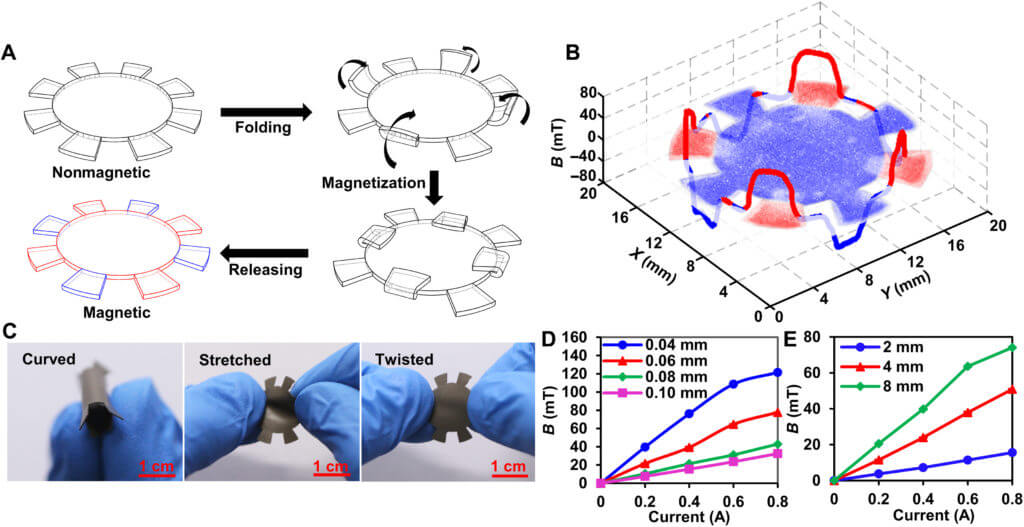
The magnetic membrane is carefully sliced into a rotor containing eight teeth, then pleated and magnetized to ensure optimal magnetic properties. The impeller and fluid chamber were meticulously molded according to predetermined patterns.

To power the SMLMs, a flexible PCB circuit was designed and embedded within the bottom base, leveraging its flexibility and compactness to reduce the device’s overall footprint. These intricate components enabled us to achieve a highly functional and reliable SMLM with exceptional magnetic properties and precise control capabilities.

Simulating Real-World Devices with COMSOL: Magnetic Rotor Analysis and Results.

The figure shows the simulation result. The device is simulated using the advanced COMSOL software to evaluate the magnetic rotor’s behavior.
The simulation included an analysis of the magnetic field distribution and the resultant torques observed during the operation. The operating coils were supplied with a precisely measured current of 0.2 A for the duration of the simulation. It is worth noting that the results yielded by the simulation accurately and specifically represented the actual functioning of the real-world device. This exercise has demonstrated the efficacy and precision of utilizing computational tools to predict the performance and behavior of magnetic rotors with a high degree of certainty.

Soft magnetic levitation micropumps (SMLMs) have been subject to numerous simulations to evaluate their properties. Initial simulations were conducted through COMSOL, displaying a magnetic field distribution at an initial zero-degree rotation angle, indicating vertical and radial repulsion between the confiners and the magnetic rotor. The mutual repulsion between these components leads to magnetic levitation of the rotor within the chamber, preventing any physical contact with the chamber’s exterior walls. The vertical magnetic force exerted upon the rotor varies between -0.02 to 0.04 N, with a 45° phase difference detected between the torques of the eight rotor teeth. Although, at some points, the torque of each tooth becomes negative, the overall torque of the rotor remains positive with a maximum value of 0.45 mN/m, thereby enabling the rotor to spin in a unidirectional manner.

Another set of simulations was conducted to study the velocity and static pressure distribution contours of the SMLMs, with variations in the number of blades and impeller outlet angles. In a simulation with a rotation speed of 1000 rpm, the impeller contributes to gradually increasing velocity and static pressure along the radial direction, peaking at the impeller’s periphery. The volute section allows for the conversion of kinetic energy to pressure energy. The eight-bladed impeller with a 60° outlet angle results in a maximal flow rate of 134 ml/min at the volute outlet, accompanied by a maximal differential pressure of 1.4 Pa between the inlet and the volute outlet. Advancements in the number of blades and outlet angles improve the impeller’s operational capacity, flow rates, and differential water level. Despite the range of possibilities, the impeller with eight blades and a 60-degree outlet angle is still considered the most efficient design due to its high flow rate and differential pressure. However, experimental results demonstrate that the simulated flow rate is four times greater than the actual operating conditions. This outcome is most likely explained by the wobble and vibration of the rotor and impeller during practical operations, leading to additional energy loss and decreased conversion efficiency.

Functioning of SMLMs

A microcontroller evaluation board was employed to precisely manipulate sub-microsecond light modulators (SMLMs) through pulse width modulation (PWM) driving signals. Manipulation of the PWM signal frequency allows for flexible modulation rates. The device is powered by an external direct current (DC) power supply and programmed by firmware. The system is calibrated to achieve optimal performance and high precision, making it one of the most advanced and accurate systems available.

Investigating the Diffusion Patterns of Iodine & Urea Using Dialysis Packs

The diffusion patterns of iodine and urea were investigated with great precision by employing dialysis packs for accurate measurements. The color of the starch solution was recorded diligently every five minutes with and without adding a new iodine solution. Furthermore, the open-circuit potential of the PANI electrode was closely examined and measured to determine with confidence and precision the variation in the urea concentration within the dialysis bag.

Additionally, to enhance our understanding of Surface Mounted Linear Motors (SMLMs), a study was conducted to examine their characteristics in detail. A Gauss meter measured the magnetic field intensity above the center of the coils with varying wire diameters and currents. Moreover, using a digital balance, the average flow rates of SMLMs were meticulously calculated in single, series, and parallel configurations. Finally, for greater accuracy, the operating temperature of the SMLM was closely monitored using a thermal camera.

Understanding Hemolysis: Examining The Process and Its Implications

To examine and demonstrate the process of hemolysis, a precise amount of 0.2 ml of blood cells, specifically drawn from the Small and Medium Life Forms (SMLM), were incorporated into the experimental group. The hemolysis rate was then meticulously calculated by dividing the difference in absorbance measurements observed between the experimental control group and the negative control group by the difference in absorbance measurements noted between the positive control group and the negative control group. It must be emphasized that hemolysis, the extravasation and subsequent destruction of red blood cells, is a crucial element in various biological pathways and can be impacted by many factors, such as osmotic stress, changes in temperature, and acidity. Hence, it is fundamental for researchers to gain insight into this process and carefully analyze its outcomes to comprehend the possible implications of such changes in a biological system.

Temperature Regulation in Human Body: Using SMLM and Thermal Cameras

To effectively regulate the human body’s temperature, an SMLM (sub-dermal miniature liquid module) was utilized by affixing it to the arm. This device was filled with water at a temperature of 15°C, and precise temperature monitoring was conducted using a thermal camera. The experiment aimed to closely examine the thermal response of the skin’s epidermis and the tube’s temperature, which are critical factors in maintaining optimal human body temperature. By carefully studying these factors, we can gain valuable insight into the mechanisms that govern temperature regulation in the human body. Furthermore, the rigorous scientific approach in this experiment ensures that our findings are highly accurate and significant, contributing valuable data to the field of thermophysiology.

Exploring the Components & Dynamics of the pumps

Soft magnetic levitation micropumps (SMLMs) have emerged as a promising alternative to conventional fluid pumping equipment in medical applications. Their potential uses range from renal dialysis and extracorporeal membrane oxygenation (ECMO) to heart failure treatment. They are also suitable for fluid delivery systems for microenvironment regulation, either worn on the skin or integrated into clothing.

A typical SMLM is composed of six key components:

  • a magnetic rotor
  • an impeller
  • six electromagnetic stators
  • two magnetic confiners
  • a fluidic chamber
  • a flexible PCB circuit

The magnetic rotor is made up of origami magnetic membranes, which exhibit enhanced magnetism and definable magnetic polarities. These membranes are integrated with a silicone impeller to generate fluid propulsion power. The flexible PCB circuit creates a pulse-width modulation (PWM) signal that regulates the six electromagnetic coils connected to form the stators in three phases.

The principal operating mechanism of an SMLM is based on the combined effects of magnetic levitation and magnetic field coupling between the stators and magnetic rotors. The magnetic rotor levitates in a liquid environment due to the opposite magnetic polarities of the top and bottom magnetic confiners. The rotor oscillates between the upper and lower boundaries of the fluidic chamber in dynamic equilibrium to generate the necessary pumping power.

To adapt to different requirements, such as implantation or wearability, multiple SMLMs with varying sizes and weights have been developed. The smallest SMLM, designated as the small SMLM, is suitable for implantation in small animals and has dimensions of 9×9×4 mm³ and a mass of 0.32 g. The medium pump, with dimensions of 18×18×6 mm³, weighs 1.9g, while the largest SMLM, known as the conventional pump, measures 36×36×9 mm³ and weights 12.8 g. Remarkably, the flexible PCB circuit is a mere 33×25 mm² and weighs only 0.66 g.

The miniaturized, lightweight, and flexible designs of SMLMs enable them to be readily worn on the human body without causing any hindrance or discomfort to the wearer. This development offers immense potential for creating fully flexible artificial organs that can be readily integrated with other soft robotic systems and wearable electronics. The potential healthcare revolution enabled by such innovations can have profound effects, positively impacting patient well-being and quality of life.

Understanding Soft Magnetic Levitation Micropumps (SMLMs) – Exploring Features and Advantages

The soft magnetic levitation micropump (SMLM) is a highly regarded technology with a crucial component, the magnetic rotor. This rotor comprises a circular flexible membrane with an average thickness of 700 micrometers and Nd2Fe14B microparticles and polydimethylsiloxane (PDMS). Using origami techniques, manufacturing the rotor involves cutting the membrane into a petal shape, alternating tooth folding, and uniaxial magnetization. This allows for programmable magnetic polarities and an increase in the magnetic field density of the rotor.

One of the distinctive features of the magnetic rotor is its exceptional flexibility, which allows it to endure repeated bending, stretching, and twisting. Using soft and flexible materials reduces the risk of hemolysis of blood cells and cell disruption, as evidenced by studies that indicate that soft materials have lower hemolysis rates in the presence of blood. This property has made it possible to use soft materials as coating layers for centrifugal pumps; this enhances surface smoothness and reduces abrasion resistance. Hence, flexible rotors and propellers reduce cell damage by providing a soft buffer layer.

SMLMs rely on the magnetic flux density generated by the coils to function, and it has been established that various coils can generate different magnetic flux densities. Research results suggest the direct proportionality of flux density to the coils’ current and outer diameter. Additionally, smaller-diameter coils generate higher flux density due to the more significant number of turns. Furthermore, different coil geometries can be used to create SMLMs with various sizes. For instance, typical SMLMs contain coils with a diameter of 8 mm, a height of 0.6 mm, and a wire diameter of 0.06 mm to balance heat production during operation and magnetic flux density. These findings have demonstrated the potential of SMLMs for practical applications in various fields.

Excellent Potential of Surface-Modified Magnetic Nanoparticles (SMLMs) in Healthcare Applications

Surface-Modified Magnetic Nanoparticles (SMLMs) have recently emerged as a promising technology with numerous medical applications. One of their potential capabilities lies in accelerating diffusion rates. Several experiments were conducted whereby the movement of iodine molecules through a dialysis membrane was assessed with and without SMLMs. This experiment allows the scientist to prove the efficiency of the device. The results showed that the presence of SMLMs increased the diffusion speed by 26%, leading to a faster rate of molecule exchange. This phenomenon is precious in the medical setting, where a rapid and efficient interaction of molecules can mean the difference between life and death.

Another intriguing application of SMLMs is their ability to regulate the microenvironment of the human body. Studies have shown that by circulating cooled water throughout the body, SMLMs can directly control the body’s temperature, which could have numerous practical benefits. For example, it might be possible to integrate multiple SMLMs onto the skin or into everyday clothing, thereby providing a wearable cooling system that could be customized to the individual’s needs. Such technology is precious in treating various health conditions, including heart failure and renal dialysis.

One of the most exciting aspects of SMLMs is their potential to be used in wearable biomedical devices, which require continuous delivery of medication, dialysate, and blood pumping. SMLMs demonstrate minimal hemolysis when blood is pumped. This minimal hemolysis shows that these nanoparticles satisfy the standards of biocompatibility. In this way, SMLMs could revolutionize how we monitor and manage our health, offering unprecedented accuracy and increased quality of life.

The versatility of SMLMs – from regulating the human body’s microenvironment to their potential use in wearable biomedical devices – suggests that the applications for these particles are widespread, with far-reaching impacts on the medical field. As studies into SMLMs continue, their unique properties will likely transform how we approach and manage health issues, leading to a brighter and healthier future.

Biocompatibility Testing of Wearable SMLM Devices: A Comprehensive Overview

The team conducted numerous experiments to demonstrate that SMLMs are biocompatible wearable devices. As a first step, a biocompatibility test was born on the skin using the FDA-approved material Parylene-C as the conformal coating layer for the SMLM. The SMLM adhered to the epidermis using a medical dressing, and no adverse effects were observed after one day. SMLMs were also implanted into the abdominal cavities of rodents for biocompatibility testing. There were no apparent indicators of discomfort, and changes in food intake and body weight were comparable to those of the control group.


Histopathological evaluation of tissues revealed no inflammation or tissue abnormalities. Additional biocompatibility tests were conducted on systems containing SMLMs, flexible PCB circuits, and coil cell batteries, with results comparable to those of the previous tests. These tests suggest that SMLMs have excellent biocompatibility and could be used for in vivo medical treatment, such as managing fluids in diseases like congestive heart failure.

The Benefits of Soft Magnetic Liquid Metal Pumps in Medical Technology

Recent technological advancements have paved the way for the development of wearable and implantable miniaturized soft magnetic liquid metal pumps (SMLMs), representing a promising solution for fluid handling applications in medical devices. These devices have been designed and tested with tremendous success, proving their potential for use in various medical treatments such as drug delivery, organ replacement, and temperature regulation.

One of the primary advantages of SMLMs lies in their animal biocompatibility, indicating a high potential for human use without causing significant adverse effects. These devices’ low power consumption and straightforward design also make them an attractive option for many applications.

Furthermore, SMLMs play a crucial role in the development of medical devices of the next generation, as they are built to be more effective, less invasive, and more user-friendly than existing technologies. With their ability to handle fluids precisely and in control, these devices provide a new level of accuracy that is essential in many medical procedures.

Moreover, using SMLMs in medical applications is not limited to drug delivery alone. These devices can also regulate the body’s temperature and assist in organ replacement. With the aid of soft magnetic liquid metal pumps, temperature regulation in medical devices can become much more efficient than existing methods, resulting in better patient outcomes.

SMLMs represent a significant step forward in developing medical devices, with their numerous advantages making them an attractive option for various applications. These devices’ successful design, testing, and user-friendly design make them essential tools for medical professionals worldwide. As future research expands our understanding of these exciting new technologies, we will see even more innovative medical applications.