Welcome to Biomedon Magazine!

We are honored to present you with this content and hope this will inspire you for your essential research in the Biomedical area.

We understand the importance of staying ahead of the curve in the biomedical field. That’s why our company is dedicated to developing and refining innovative technologies that can make a difference in your research. Our solutions are designed to change how you think about research, providing the tools you need to make game-changing discoveries and improve your competitiveness.

Here at Biomedon, we specialize in custom engineering research instrument development that caters to your unique requirements. Our teams of highly skilled engineers, scientists, and experts are dedicated to using cutting-edge technologies to develop innovative laboratory and research equipment.

Achieving breakthroughs is not a simple task. However, with our top-of-the-line solutions, you will have the most efficient and effective tools to make groundbreaking discoveries and stay competitive.

By partnering with us, you can be confident that you will gain access can access the best research instruments and tools to facilitate game-changing discoveries in your field.

Thank you for choosing Biomedon Magazine as your go-to research insight and inspiration.
Introducing The Smallest Remote-Control Walking Robot Ever Created

Curiosity

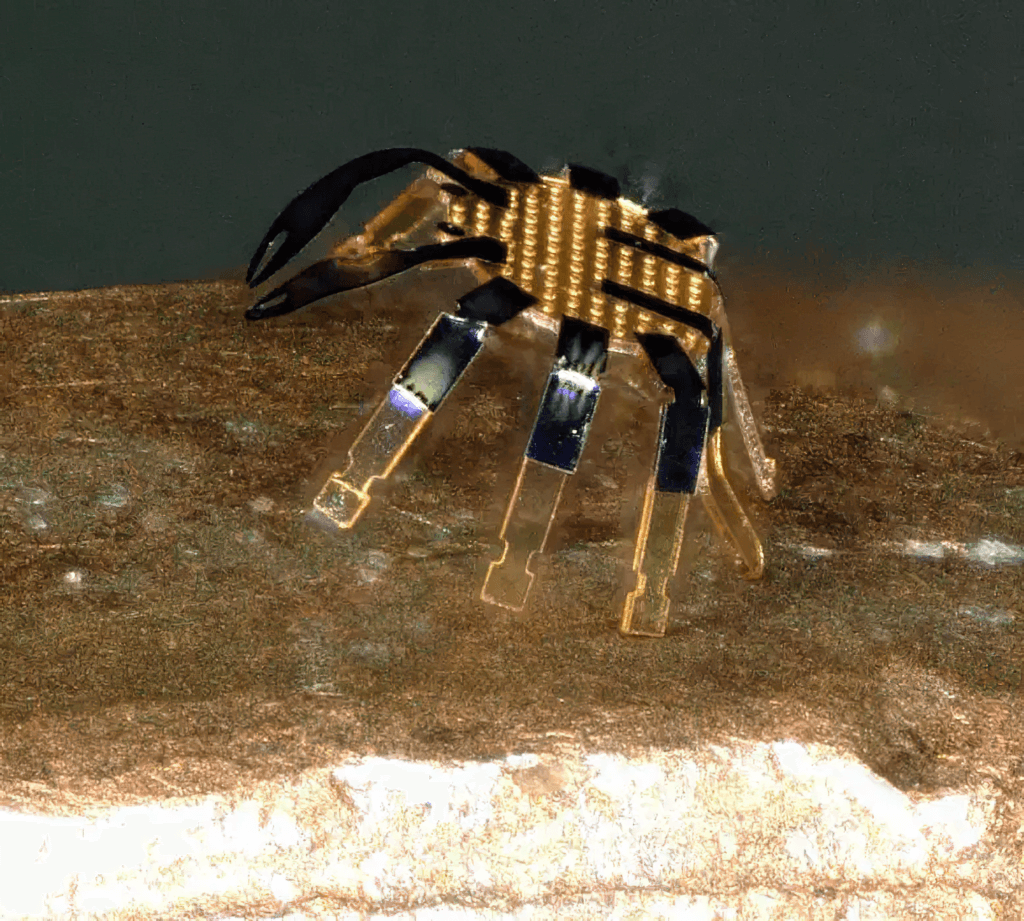
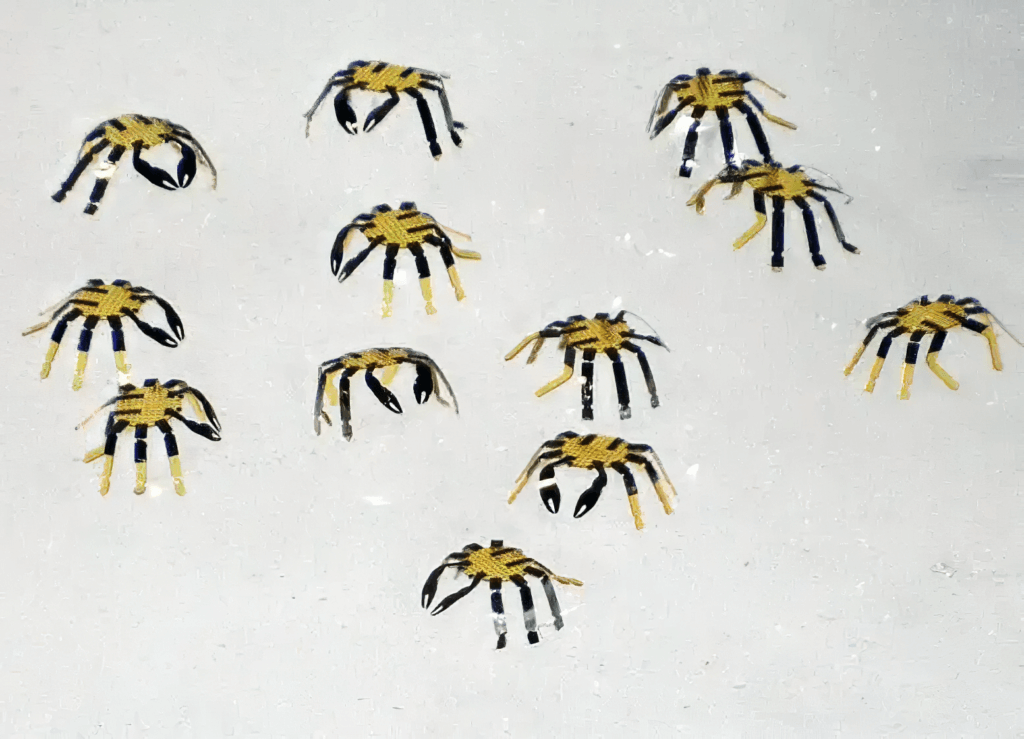
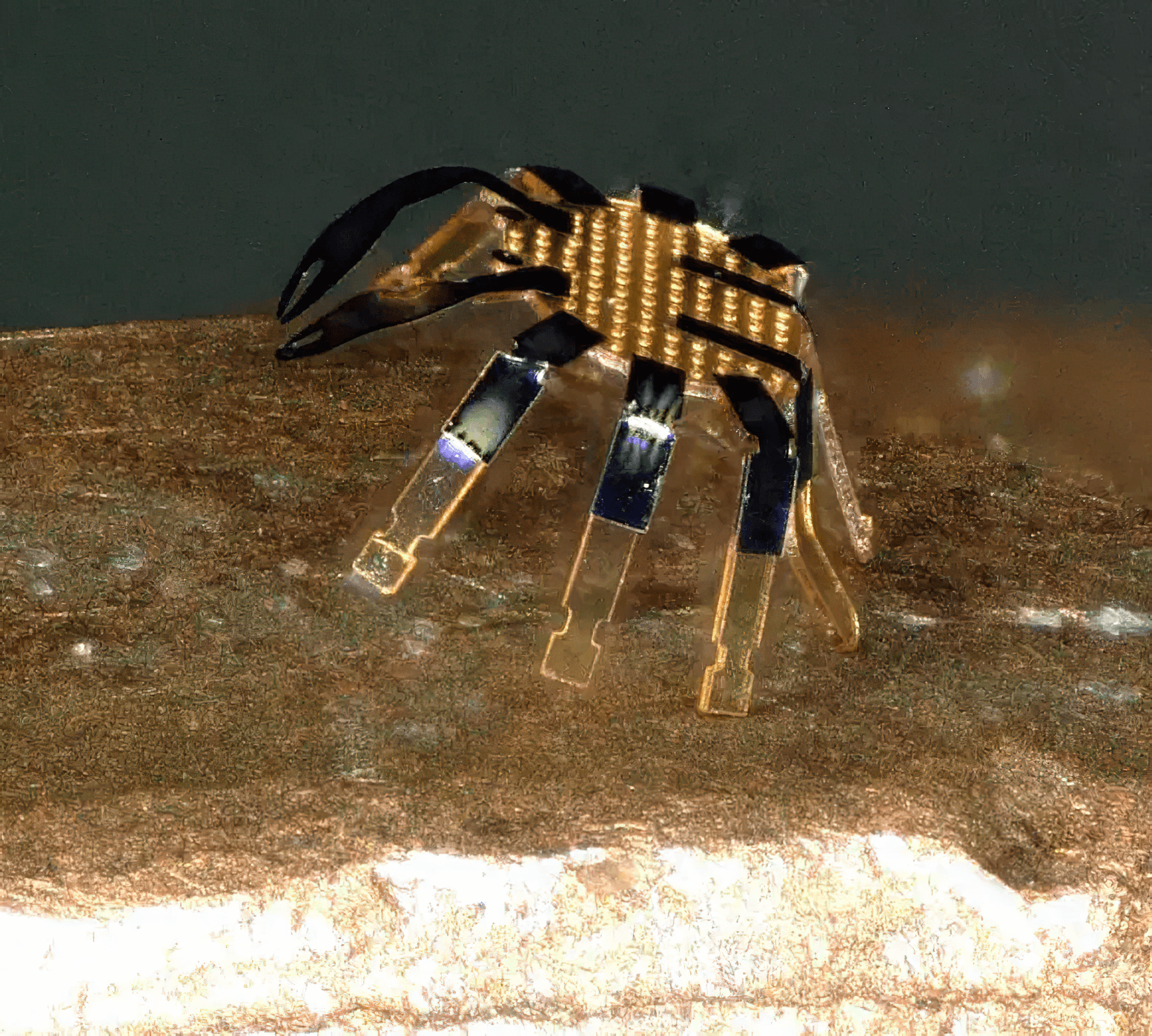
A Tiny Robot Crab

You will never look at insects the same way again after reading about what technology is doing these days. Imagine a small robot crab the size of a flea that can bend, twist, turn, and jump. 

That is precisely what researchers at Northwestern University have done.

First demonstrated in May 2022, the millirobot is the most miniature remote-controlled walking robot ever created by humans.

Using a tiny radio receiver that transmits signals to the robot’s onboard antenna, the mini-robot can be controlled from up to 20 feet away using motors.

In addition to controlling the robot remotely to activate it, the laser scanning direction determines its walking direction. The robot is capable of following paths and changing its speed and direction.

The robot’s body is made of two millimeter-thick carbon fiber plates. Four ultrasonic motors power its legs, and tiny metal wires control its movements.

With its small size, the millirobot can perform tasks such as search and rescue, environmental monitoring, hazardous area exploration, and medical procedures.

Using the millirobot, Northwestern researchers plan to explore robotics on a new level of mobility and flexibility. Furthermore, it is a crucial step toward developing advanced robotic technologies to perform complex tasks in hazardous environments, such as medical procedures.

While the millirobot is still in its infancy, researchers constantly refine its design and explore possible uses. Ultimately, they hope to make robotics more accessible and beneficial to people worldwide by combining millirobots with larger robots to perform tasks too difficult or dangerous for humans to carry out alone.

Due to its small size, the millirobot can be deployed in tight or dangerous spaces that larger robots cannot. After disasters like earthquakes or hurricanes, they could help locate survivors, allowing faster recovery. As well as ensuring worker safety, these devices can detect hazardous materials in the workplace.

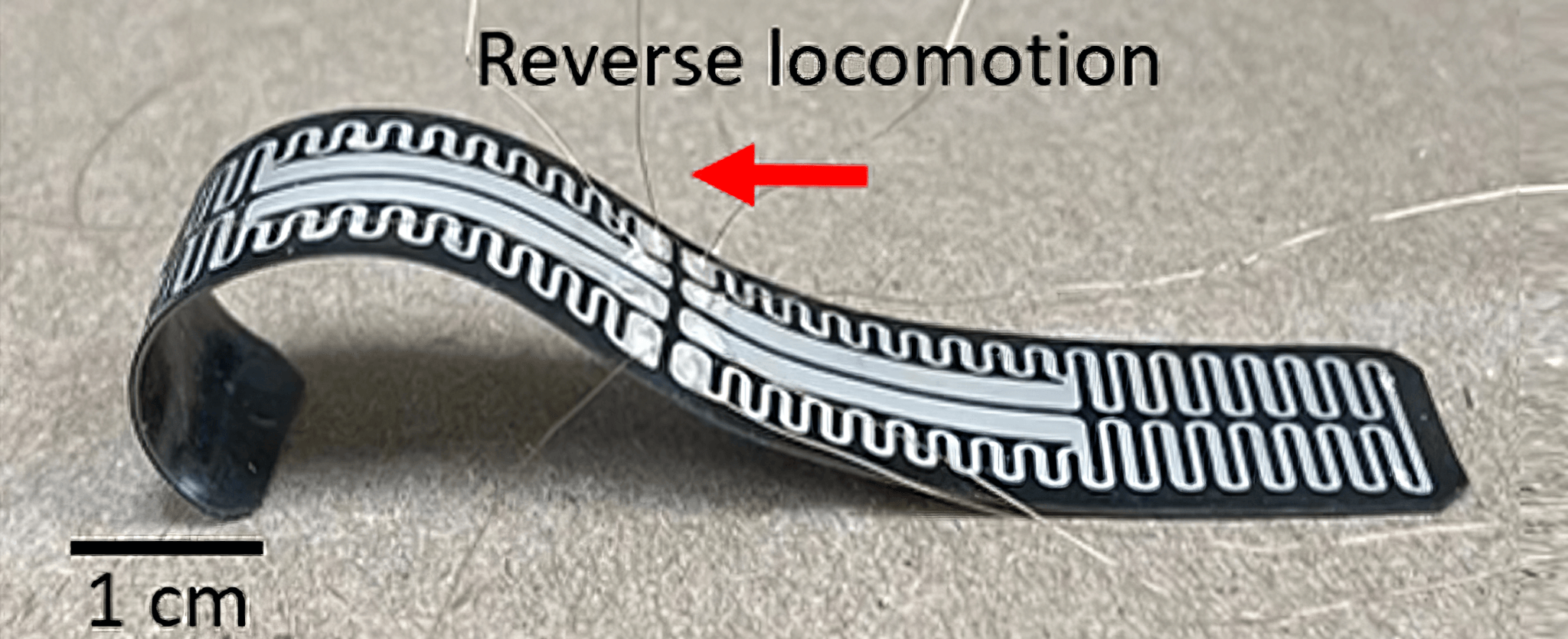
They also created millimeter-sized robots that resemble inchworms, crickets, and beetles. Though the study is experimental, the researchers hope their method could lead to developing tiny robots that can perform practical tasks.

Instead of sophisticated machinery, hydraulics, or electricity, the device is propelled by the elastic resilience of its body. When heated, the researchers used shape-memory alloy material to build the robot, which transformed into its “remembered” shape.

An elastic layer of glass was used to restore the distorted shape of the components of the structure after a scanned laser beam quickly heated them.

A robot’s locomotion occurs when it changes phases — from deformed to programmed position and back. By recovering mechanical energy, a single actuation can perform multiple actions. As a result, the robot can easily traverse various terrains, including squeezing through tight spaces and climbing stairs.

Furthermore, its ability to recover energy from deformation and low power consumption make it an ideal candidate for autonomous and semi-autonomous applications. In biomedical engineering, its potential could be extended to drug delivery systems and tissue regeneration.

Scientists are now developing technology to make it more robust and reliable. They are also looking for ways to reduce costs and increase energy efficiency.

With its potential applications, this technology could revolutionize robotics in various fields ranging from search-and-rescue operations to biomedical engineering applications. In addition, its adaptation for consumer products can create multiple possibilities, from autonomous cars to smart homes.

This technology has immense potential. By continuing research and development, it will become a powerful tool with numerous applications in various disciplines. Soon, robots powered by this technology may transform our everyday lives in ways we cannot imagine. The possibilities are truly endless.

With more research and development, this versatile energy recovery mechanism could provide a range of new robotic applications in the near future.

It is an exciting advancement in robotics and has enormous implications for the possibility of robotic technology in the real world – no matter their size.