Welcome to Biomedon Magazine!

We are honored to present you with this content and hope this will inspire you for your essential research in the Biomedical area.

We understand the importance of staying ahead of the curve in the biomedical field. That’s why our company is dedicated to developing and refining innovative technologies that can make a difference in your research. Our solutions are designed to change how you think about research, providing the tools you need to make game-changing discoveries and improve your competitiveness.

Here at Biomedon, we specialize in custom engineering research instrument development that caters to your unique requirements. Our teams of highly skilled engineers, scientists, and experts are dedicated to using cutting-edge technologies to develop innovative laboratory and research equipment.

Achieving breakthroughs is not a simple task. However, with our top-of-the-line solutions, you will have the most efficient and effective tools to make groundbreaking discoveries and stay competitive.

By partnering with us, you can be confident that you will gain access can access the best research instruments and tools to facilitate game-changing discoveries in your field.

Thank you for choosing Biomedon Magazine as your go-to research insight and inspiration.
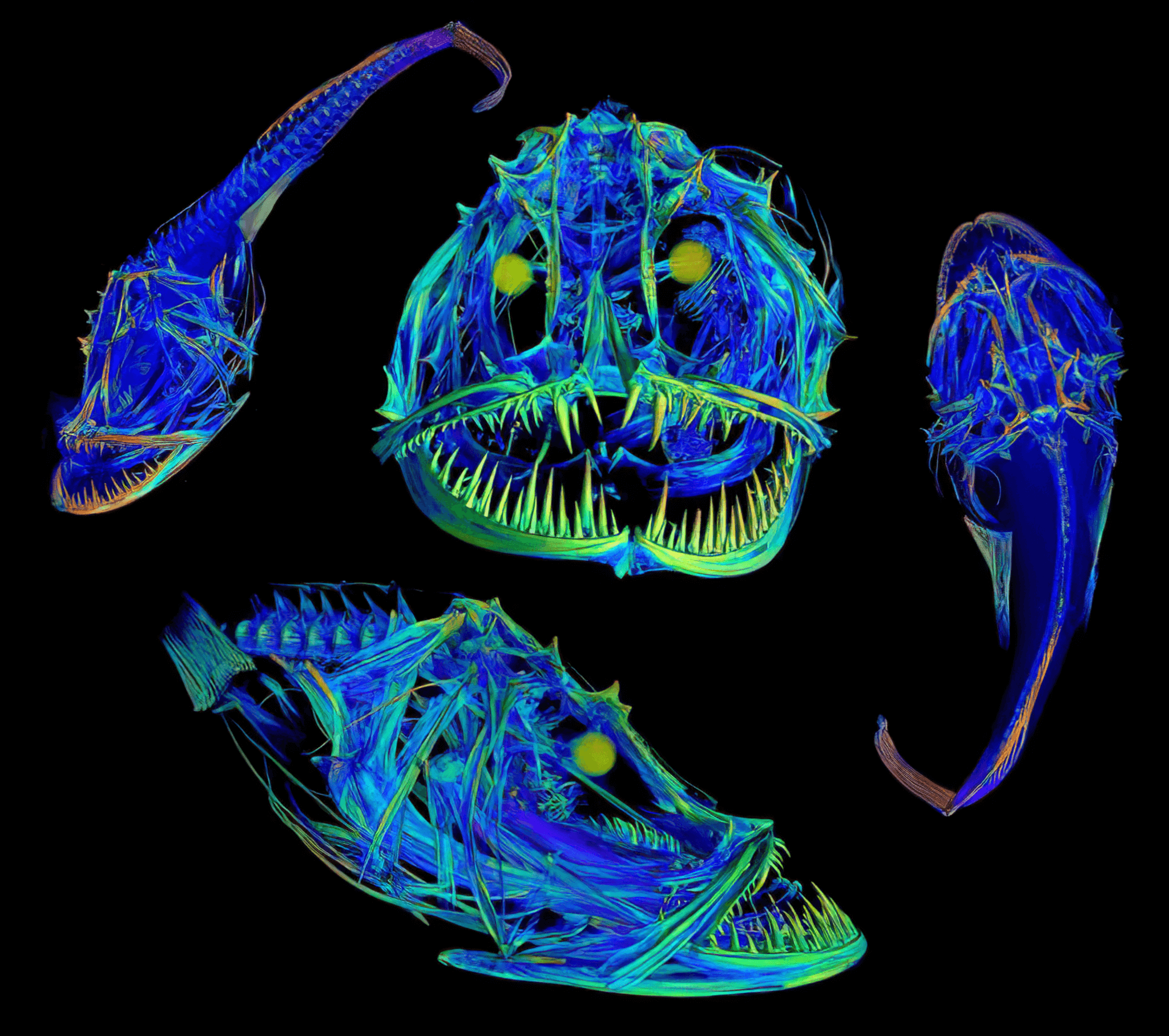
Unveiling the Stunning Inner Beauty of Fish

Inspiring light

A combination of CT Scanning, Clearing & Staining

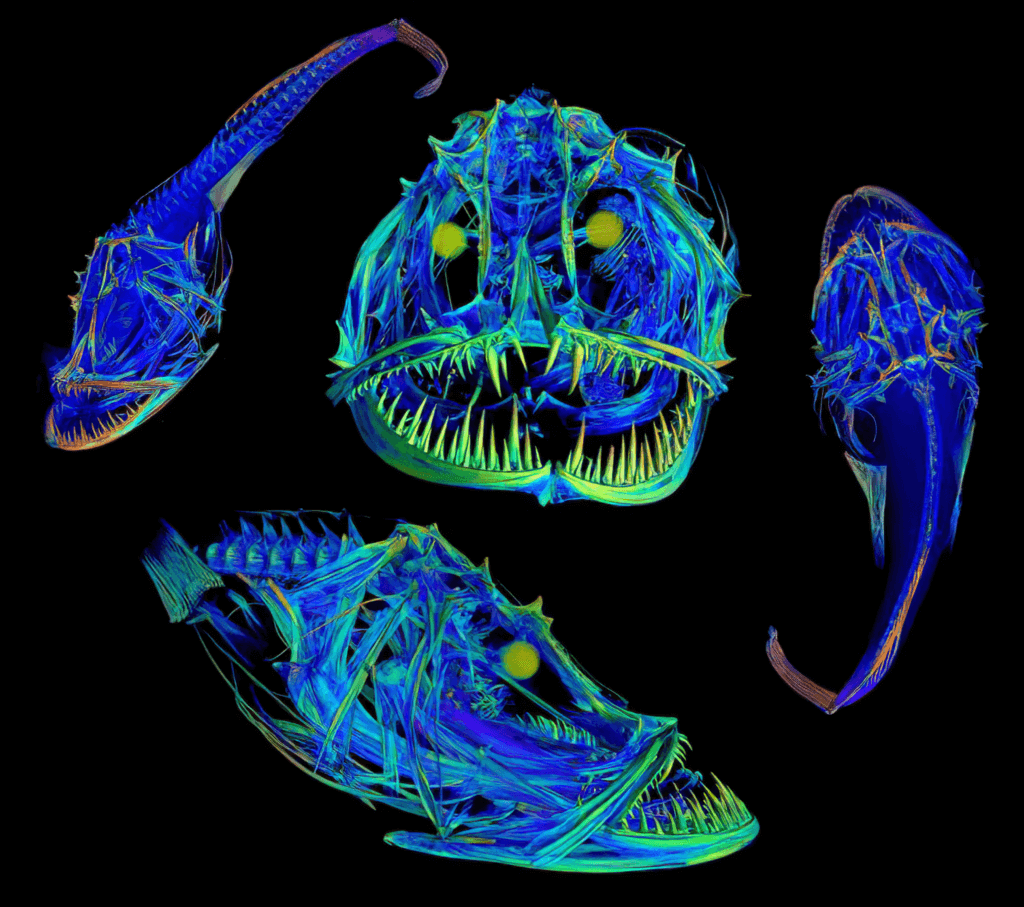
CT scans have been a game-changer in anatomy, enabling scientists better to understand the intricate internal structures of living organisms. In the case of fish specimens, CT scanning has provided a non-invasive method to create high-resolution 3D models, allowing researchers to study the intricate details of their anatomy without causing any harm.

The “Inner Beauty: Skeletons Revealed from the Museum’s Fish Collection” exhibit takes this one step further by showcasing a preservation technique called clearing and staining. This process involves removing the soft tissue of the specimen, leaving only the bones and cartilage intact. Once the soft tissue has been cleared away, the bones are stained with various chemicals, providing a clear and detailed visualization of the skeletal structure.

Combined, these two techniques have produced striking images of fish specimens, revealing their intricate skeletal system in a way that has rarely been seen before. By removing the soft tissue and staining the bones, intricate details of the skeleton, such as the shape and size of the vertebrae, ribs, and fins, can now be seen with remarkable clarity. This exhibition is visually stunning and highlights how scientific research and preservation efforts can help us better understand and appreciate the beauty and complexity of the natural world.

But why is it essential to study the anatomy of fish, you may ask? Fish are critical to the aquatic ecosystem, playing a vital role in food webs and maintaining the balance of aquatic habitats. As such, understanding their anatomy is crucial for scientific research and developing effective conservation policies. Many fish species face the threat of overfishing, habitat destruction, and climate change, making it even more critical to preserve and study these creatures while we still can.

The exhibit also showcases the evolution of fish over millions of years. By examining the skeletons of various fish specimens, visitors can see how different species have adapted to their environments, developing unique skeletal structures to suit their needs. For example, some fish have elongated jaws or sharp teeth, enabling them to catch prey more efficiently. In contrast, others have flattened bodies, allowing them to swim more efficiently in shallow waters. These adaptations have allowed fish to survive and thrive in countless environments, underscoring their incredible versatility and resilience.

The “Inner Beauty: Skeletons Revealed from the Museum’s Fish Collection” exhibit is an awe-inspiring display of natural beauty and a reminder of why scientific research and preservation efforts are crucial for protecting the natural world. By combining advanced imaging techniques with traditional preservation methods, we can better understand the complexity of life on this planet, allowing us to appreciate the beauty and wonder of nature in a more profound way.