Welcome to Biomedon Magazine!

We are honored to present you with this content and hope this will inspire you for your essential research in the Biomedical area.

We understand the importance of staying ahead of the curve in the biomedical field. That’s why our company is dedicated to developing and refining innovative technologies that can make a difference in your research. Our solutions are designed to change how you think about research, providing the tools you need to make game-changing discoveries and improve your competitiveness.

Here at Biomedon, we specialize in custom engineering research instrument development that caters to your unique requirements. Our teams of highly skilled engineers, scientists, and experts are dedicated to using cutting-edge technologies to develop innovative laboratory and research equipment.

Achieving breakthroughs is not a simple task. However, with our top-of-the-line solutions, you will have the most efficient and effective tools to make groundbreaking discoveries and stay competitive.

By partnering with us, you can be confident that you will gain access can access the best research instruments and tools to facilitate game-changing discoveries in your field.

Thank you for choosing Biomedon Magazine as your go-to research insight and inspiration.
The Power of Microcarriers for Regenerative Medicine

Inspiring light

Exploring Stem Cell Expansion Techniques in the Lab

The field of regenerative medicine has made significant strides in recent years, with the development of innovative approaches aimed at providing solutions for a wide range of medical conditions. One such approach involves the use of stem cells, which are cells that have the ability to differentiate into a variety of specialized cells in the body.

In the case of skeletal muscle, stem cells known as myoblasts play a crucial role in repairing and regenerating muscle tissue. However, isolating and expanding these cells in the lab can be challenging, requiring specialized techniques and equipment.

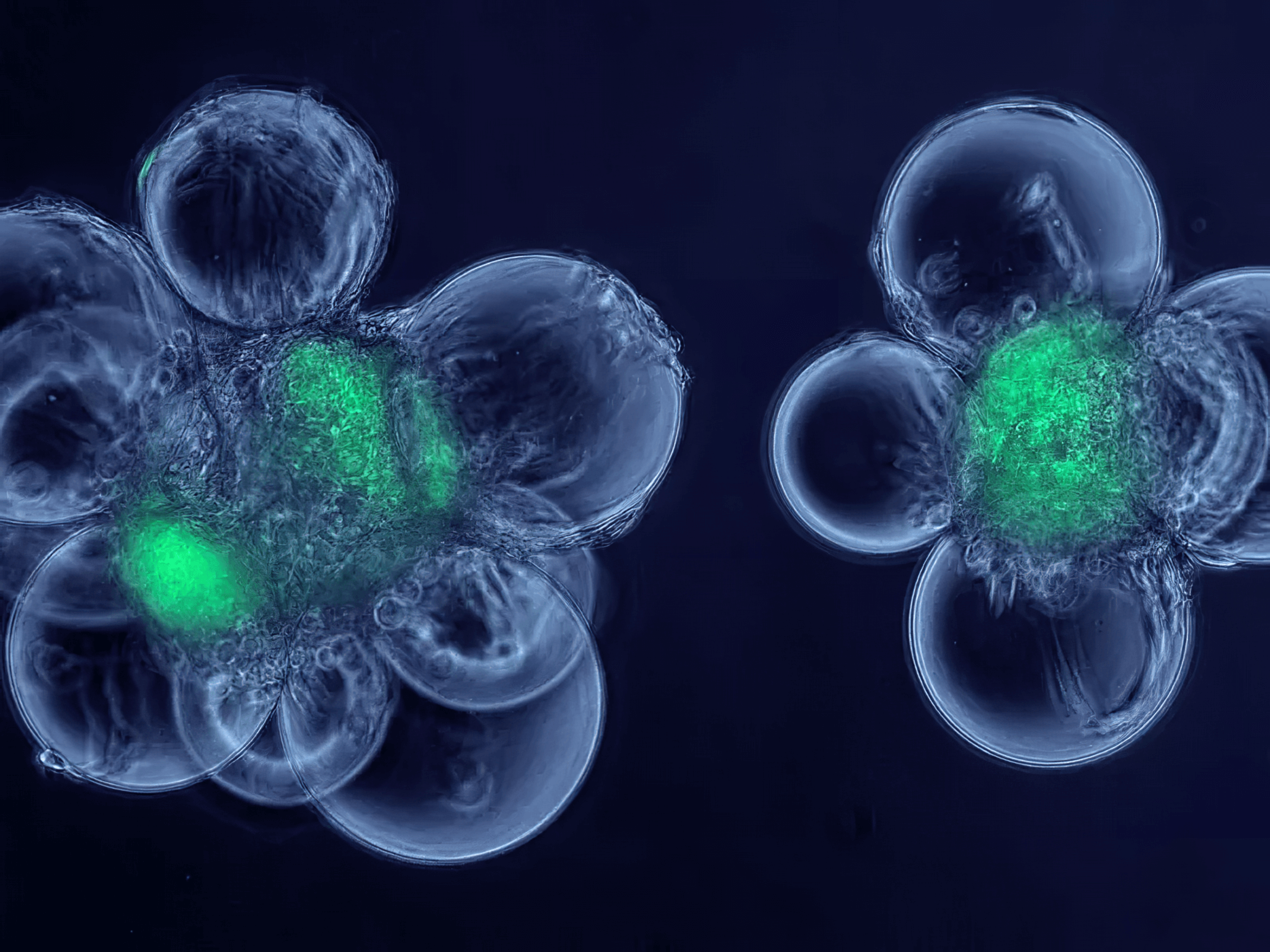
This is where microcarriers come into play. These small spherical particles provide a three-dimensional environment in which cells can attach and grow, allowing for the expansion of myoblasts and other stem cells derived from skeletal muscle. By culturing these cells in a bioreactor, it is possible to increase their numbers significantly and even create artificial “stem cell factories” for regenerative medicine applications.

The image in the micrograph provides a fascinating glimpse into this process, with green-colored stem cells visible alongside the myoblast feeder cells attached to the microcarriers. Such images offer valuable insights into the complex interactions between different cell types during the stem cell expansion process, helping researchers better understand and optimize these techniques for future use in clinical settings.

Using microcarriers represents an exciting and promising avenue for generating large quantities of stem cells for regenerative medicine applications. With continued research and development, these techniques will likely play an increasingly important role in improving the health and well-being of patients worldwide.