Welcome to Biomedon Magazine!

We are honored to present you with this content and hope this will inspire you for your essential research in the Biomedical area.

We understand the importance of staying ahead of the curve in the biomedical field. That’s why our company is dedicated to developing and refining innovative technologies that can make a difference in your research. Our solutions are designed to change how you think about research, providing the tools you need to make game-changing discoveries and improve your competitiveness.

Here at Biomedon, we specialize in custom engineering research instrument development that caters to your unique requirements. Our teams of highly skilled engineers, scientists, and experts are dedicated to using cutting-edge technologies to develop innovative laboratory and research equipment.

Achieving breakthroughs is not a simple task. However, with our top-of-the-line solutions, you will have the most efficient and effective tools to make groundbreaking discoveries and stay competitive.

By partnering with us, you can be confident that you will gain access can access the best research instruments and tools to facilitate game-changing discoveries in your field.

Thank you for choosing Biomedon Magazine as your go-to research insight and inspiration.

Augmenting Human Capabilities: Exploring the Possibilities.

Dossier

With the advancement of technology, the possibilities of augmenting the human body’s capabilities are becoming more diverse and significant. One such idea is the development of extra limbs that could revolutionize various fields, from medicine to manufacturing and construction. At the same time, this may seem like a far-fetched concept, but recent advancements in robotics are making this a probable reality.

Scientists from different universities and projects, such as the University of Freiburg, Imperial College London, and the NIMA project partners, are leading research in this field. They aim to develop extra limbs that humans can operate via electrode patches. These patches would read data and interpret neural signals enabling the extra limbs to receive input autonomously.

Nonetheless, the potential benefits of extra limbs are innumerable. Despite these extra limbs’ possibilities, a crucial question remains: Can the human body efficiently control extra limbs besides those it naturally possesses? To effectively activate these extra limbs, we must thoroughly understand the neural system’s signals.

One of the most significant benefits is facilitating multitasking and enhancing productivity, significantly boosting professionals such as surgeons, construction workers, and athletes, among others. For instance, a third arm could revolutionize construction, driving innovation in this industry and countless others. Additionally, extra limbs could improve an individual’s physical limits, allowing them to exceed what they would accomplish with their natural limbs.

Moreover, augmentative technology has already shown immense potential, especially for people with paralysis or amputations. Being able to control robotic prostheses with their minds is an extraordinary development, potentially changing the lives of millions of people. For instance, tetraplegic patients, paralyzed from their neck downwards, are already participating in clinical trials to control robotic limbs via their thoughts. Furthermore, recent studies reveal that people can even control computer cursors with their minds, allowing them to type messages and surf the internet.

The latest technological advancements raise the possibility of enhancing human limbs to increase productivity. Using unique technology, medical professionals can control up to four limbs at once, making complex surgical procedures even more accessible. These technological advancements can also benefit various fields, such as medicine, where surgical robots have become commonplace, allowing doctors to conduct intricate surgeries with superior precision.

Despite the benefits, augmentative technology has limitations, especially those requiring hardware insertions within the body. As such, testing these technologies in controlled environments is crucial before releasing them into the wider world. However, the potential of augmentative technology to transform the lives of millions of people is an exciting prospect and one to watch in the coming years.

Three Levels of Human Augmentation: Exploring the Potential Benefits and Limitations

person holding blue light bulb

It is essential to consider the full extent of human body augmentation. We can categorize it into three levels of complexity. The initial level involves enhancing a specific physical attribute, such as an exoskeleton, that increases an individual’s physical strength and reduces the risk of injury.

As we move to the second level of augmentation, we witness the integration of an additional limb, extra finger, or similar enhancements, albeit at a cost. Such improvements require manual controls, such as a foot pedal, limiting their overall utility.

Finally, the limitations associated with the previous level are eliminated at the third level, allowing individuals to integrate their enhancements into their everyday routine fully. The current Spectrum research focuses primarily on this level, which boasts the most benefits and potential for those seeking to augment their physical abilities.

As technological advancements continue, we will likely witness further developments in human augmentation, pushing the boundaries of current possibilities. However, the potential for enhanced physical abilities has driven researchers and innovators to explore the full extent of these possibilities. It is important to note that implementing human augmentation at any of these levels is approached with caution and care to ensure safety and effectiveness.

Unlocking The Potential Of Non-Invasive Neural Interfaces With EEG & EMG Technology

Neural engineering has been actively researching methods to extract signals from the human nervous system for various applications, including brain-machine interfaces (BMI). However, such techniques usually require invasive implants, which can pose risks and discomfort to patients. EEG technology has emerged as a promising solution to acquire brain signals without invasive surgery. In addition, electromagnetic signals generated by muscle activity can be measured through the skin surface using a technique called electromyography (EMG). Researchers in this field have been working for over a decade to decode muscle signals non-invasively by analyzing EMG readings from high-density electrode grids attached to the skin.

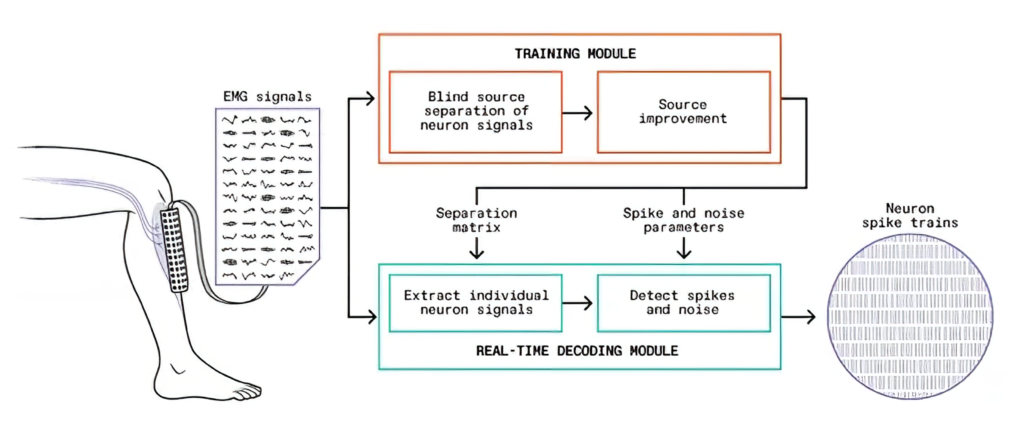
Electric signals are generated within the nervous system when neurons fire signals via the axon, propagating across the synapses to other neurons and eventually reaching the target muscle, contracting the muscle fibers. Researchers have identified patterns in muscle signals that can help determine user intention. Their approach involves extracting neuron signals from EMG readings using a training module and summarizing the information in a separation matrix. They have also developed a real-time decoding module to extract spike trains or sequences from multiple EMG signals while filtering out noise.

Decoding muscle signals is complex since a muscle receives calls from many neurons, and axons branch out to connect with many muscle fibers. However, recent signal processing and analysis breakthroughs show that the signals are effectively detangling to provide more information about spinal motor neurons. In a 2017 study on amputees, researchers demonstrated that high-density surface EMG electrodes could significantly enhance prosthetic limb control, presenting a potential solution for non-invasive BMI systems.

As neural engineering research advances, the potential of non-invasive neural interfaces using EEG and EMG technology will continue to overgrow. For example, the Spectrum system is a non-invasive platform that utilizes high-density EMG electrode grids to capture muscle signals, feeding them into a training module for analysis. Using a constantly updated algorithm, the decoding module extracts neuron activity in real time. This system significantly benefits BMI systems, enhancing the process more efficiently than invasive EMG electrodes.

Unlocking the Bandwidth of Neural Signals: A Look Into Real-Time Robotic Limb Control

Human movements are precisely controlled by the neural signals originating in the brain and traveling through the nervous system to the muscles. The ability to decode and utilize these signals in real time is of utmost importance for the effective functioning of limbs. Any delay in transmitting this information, even for a few seconds, can lead to significant functional impairment.

Recent research has revealed that neural signals possess substantial bandwidth that can be harnessed for various purposes. By analyzing these signals, it is possible to decode the intended movement of the limb and translate it into action with minimal latency.

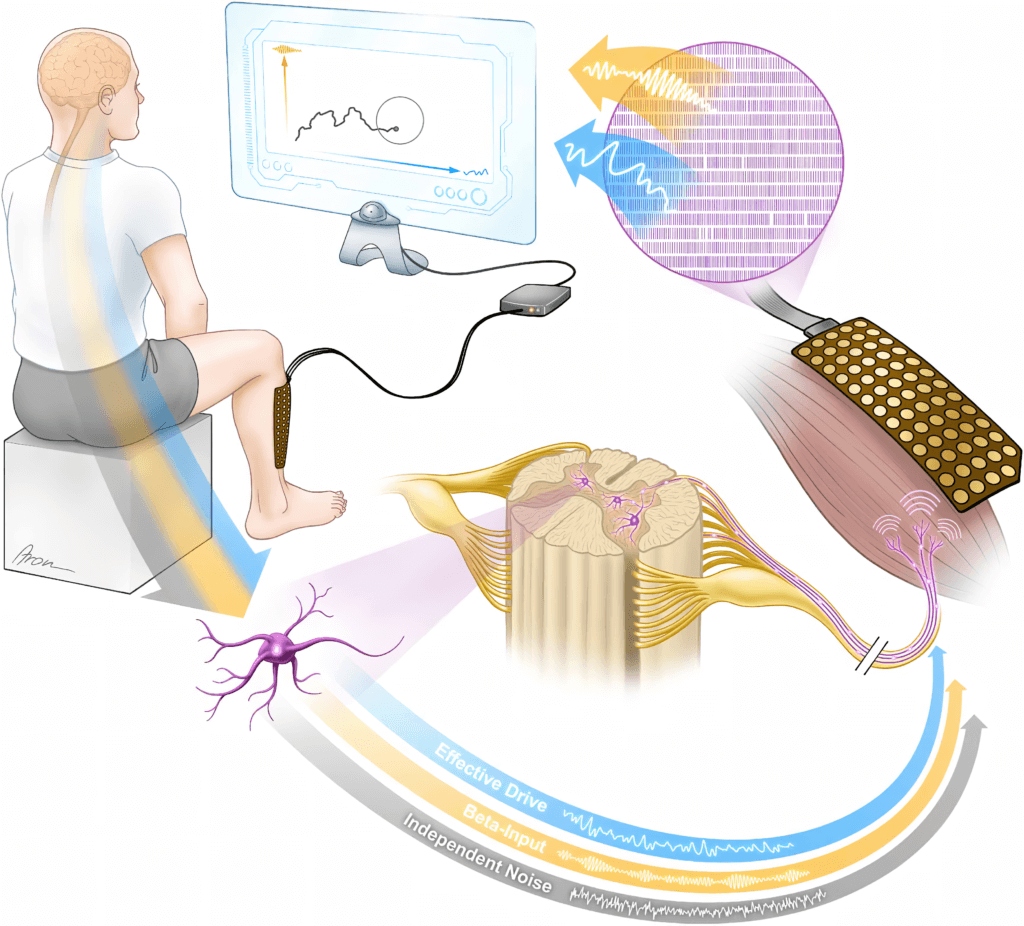
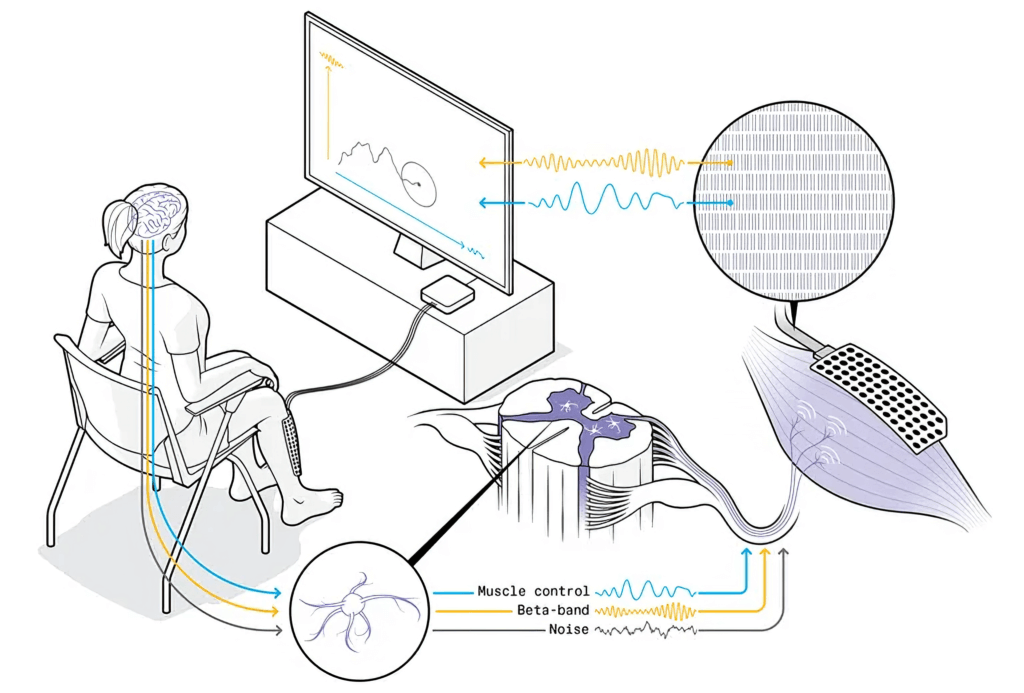
The bandwidth of these signals is especially interesting. The lower frequency part, which ranges under 7 Hz, is transformed into muscular force. This property allows for the smooth movement of the limbs. However, an even higher frequency, ranging from 13 to 30 Hz, is only used sometimes. The reason behind this additional bandwidth is still a topic of interest for researchers. The prevailing hypothesis suggests this could be a failsafe mechanism if any issues arise.

The human body possesses a remarkable ability to support high-frequency neural signals, even when they are not being utilized for muscle control. Such a capability has captured the scientific community’s interest due to its potential for controlling robotic limbs. However, practically implementing this phenomenon is complex and requires significant experimentation.

These signals vary from slow and steady waves to high-frequency bursts. Surprisingly, our bodies can tolerate these high-frequency signals even if they do not serve any discernible purpose for muscle control.

Scientists have been attempting to harness this unique property of neural signals and employ it for controlling robotic limbs. However, this task is inherently challenging, requiring a deep understanding of the complex neural mechanisms that govern muscle movement. 

The study of neural signals holds immense potential for developing prosthetic limbs. Recent research has explored the ability to harness the additional bandwidth of these signals to create more precise and responsive control mechanisms for augmentations, allowing for real-time movement adaptation and increased functionality.

Neural signals carry a wealth of information that can be utilized to improve prosthetic performance. By analyzing these signals, researchers can gain a deeper understanding of how the brain commands limb movement and incorporate this knowledge into the design of robotic prostheses. 

Advancements in the field of neural signal analysis have the potential to enhance the development of prosthetic limbs significantly. Intensive research is imperative to unlock the full potential of these technologies. By exploring sophisticated signal processing techniques and developing advanced algorithms, it is possible to revolutionize the landscape of augmented human development. These groundbreaking innovations can enhance prosthetic capabilities, allowing for unprecedented precision, control, and adaptation. With further research and development, we can create a world where technology provides a truly transformative impact on human potential. 

Rewiring the Mind: Controlling a Computer Mouse with Extra Neural Capacity

In a fascinating experiment, a team of researchers tested the capacity of human neural control over external devices. To perform this experiment, a group of volunteers was recruited and fitted with an EMG system, allowing researchers to measure the electrical activity generated by their leg muscles. Specifically, the researchers placed a patch containing 64 electrodes on the tibialis anterior muscle on the shin, responsible for the upward flexing of the foot upon contraction. This muscle was chosen for its superior orientation of muscle fibers and large skin area, making it ideal for neural control experimentation.

During the test, participants were instructed to contract their tibialis muscles and increase tension while preventing movement. Despite limited guidance on cursor movement, the volunteers were able to exercise their cognitive power and control the cursor’s direction through visual cues.

As the experiment continued, participants discovered ways to maneuver the cursor more freely. They created a second signal to control the up-and-down movement of the cursor, which operated separately from the overall muscle control. This was a significant achievement, demonstrating the remarkable capacity of the human mind to control external devices.

Furthermore, the researchers at Imperial College London sought to apply these findings to develop a system enabling participants to control a robotic limb while performing their daily activities. Through their innovative approach and building on previous research, the team developed the Multi-limb Virtual Environment (MUVE). This advanced system allowed for the control of four robotic arms, which could be used in various virtual reality simulations. The researchers are currently testing this technology to explore its potential for enhancing the lives of people with disabilities and other applications.

The recent advancements from the abovementioned study represent a significant breakthrough with far-reaching implications for the burgeoning fields of neural control and brain-computer interfaces. These groundbreaking findings can potentially revolutionize the landscape of rehabilitation, disability, and cognitive neuroscience. With an unprecedented level of evidentiary detail and semantic complexity, the revelations garnered by the researchers have opened up new avenues of exploration within this field while simultaneously paving the way for an array of exciting commercial applications.

Unlocking The Potential of Human Augmentation Technology

Human augmentation is a rapidly advancing field with immense potential to transform how we live and function in the world. Scientists and researchers are working tirelessly to identify the next steps in this area, and the initial findings have been promising. However, with exciting possibilities come significant challenges, including developing appropriate control mechanisms that enable users to manage and manipulate robotic body parts easily.

To gain a comprehensive understanding of the operation of these augmentations and achieve comfort and proficiency in their use, it is crucial to understand how the entire system works, involving intensive research into the impact of neural processes on these new technologies. While initial results have shown promise, much more research and development is necessary before these augmentations become commonplace and easily accessible.

One of the unique challenges in adapting human augmentation technology lies in the different levels of learning required by other individuals. Individuals with congenital deformities, such as those born with an extra finger or limb, tend to have an easier time adapting to these augmentations as their brains are already conditioned to manage such challenges. However, for individuals who must learn to operate additional limbs or robotic body parts, a significant learning curve must be managed.

Researchers have proposed using beta-band signals to enable users to control these devices directly with their brain signals. These signals offer a higher frequency bandwidth that presents exciting possibilities for developing more advanced human augmentation technology. However, significant research is still necessary to determine the extent to which this approach will be successful and the implications of such technology on individuals’ cognitive load and attention.

One of the primary goals of human augmentation technology is to enable users to operate these devices seamlessly and comfortably. However, achieving this goal will require continuous collaboration between researchers and their partners to develop more advanced and intuitive control mechanisms. As with any emerging field, breakthroughs in human augmentation technology will likely follow a similar path to computer technology. In the early days of computers, they were cumbersome and challenging to operate, but through continuous research and development, they have become an integral part of our daily lives.

With ongoing research and closer collaborations, human augmentation technology will continue to evolve and eventually become an essential aspect of our daily lives. Ultimately, the ability to control these devices with ease and proficiency will offer many benefits, including enhancing our physical capabilities, improving medical outcomes, and enabling us to accomplish once-impossible tasks.

Future Possibilities to the Journey of Human Augmentation Technology 

Human augmentation technology is a rapidly evolving field that is incredibly fascinating. Recent developments in this area have demonstrated that spinal cord signals are highly complex and can execute various functions in addition to commanding our muscles. One incredible example is the development of an extra finger by researchers at the University of Siena. This technology was created to improve the grip of a person who had suffered a stroke and suffered from a weak hand. The technology utilizes a cap with electrodes that send signals to the finger through eyebrow raises.

Institutions such as MIT are exploring wearable EMG suits to steer additional limbs through muscular signals. Other companies are also experimenting with various neural prostheses, neural implants, EEG scalp-based systems, and more to merge the human body’s natural movement with robotic limbs. Although this technology’s progress is in its early stages, the results we are seeing are impressive, demonstrating that we are making significant strides in advancing human augmentation engineering.

The most pressing question is how soon we can seamlessly merge natural and robotic movements. Achieving this goal would be revolutionary in various fields, from healthcare to manufacturing, where the automation of particular tasks has yet to replace human labor. We are still far from achieving such a practical application of this technology. However, as we delve deeper into the possibilities offered by human augmentation technology, the future appears bright.

Human augmentation technology has a great deal of potential. It is an area of research and development that has already yielded significant breakthroughs, and ongoing research promises to reveal even more impressive innovations in the future. The possibilities are immense, and researchers worldwide are working tirelessly to explore the complex range of signals the human body produces to understand better how we can merge technology with the human anatomy successfully.

Understanding the brain’s intricate workings is fundamental to developing human augmentation technology. Neural prostheses promise to replace brain functions lost to injury or disease, and ongoing research has demonstrated significant progress toward such a goal. Neural implants have been developed that can replicate or even enhance natural brain functions. Recent developments in deep learning algorithms have made such systems more sophisticated and effective.

Human augmentation technology is a rapidly evolving field that is incredibly fascinating. Researchers worldwide are working tirelessly to explore the complex range of signals the human body produces to understand better how we can successfully merge technology with human anatomy. The future of human augmentation technology looks promising, and we can’t wait to see what new developments will be made in this exciting area of research and development.