Welcome to Biomedon Magazine!

We are honored to present you with this content and hope this will inspire you for your essential research in the Biomedical area.

We understand the importance of staying ahead of the curve in the biomedical field. That’s why our company is dedicated to developing and refining innovative technologies that can make a difference in your research. Our solutions are designed to change how you think about research, providing the tools you need to make game-changing discoveries and improve your competitiveness.

Here at Biomedon, we specialize in custom engineering research instrument development that caters to your unique requirements. Our teams of highly skilled engineers, scientists, and experts are dedicated to using cutting-edge technologies to develop innovative laboratory and research equipment.

Achieving breakthroughs is not a simple task. However, with our top-of-the-line solutions, you will have the most efficient and effective tools to make groundbreaking discoveries and stay competitive.

By partnering with us, you can be confident that you will gain access can access the best research instruments and tools to facilitate game-changing discoveries in your field.

Thank you for choosing Biomedon Magazine as your go-to research insight and inspiration.
What Is It? A Caterpillar? A Robot? You Decide!

Curiosity

Nature is inspiring soft robotics to revolutionize the scientific landscape.

Imagine a world where miniature objects can revolutionize how we see things. Or more, how they might be able to see us.

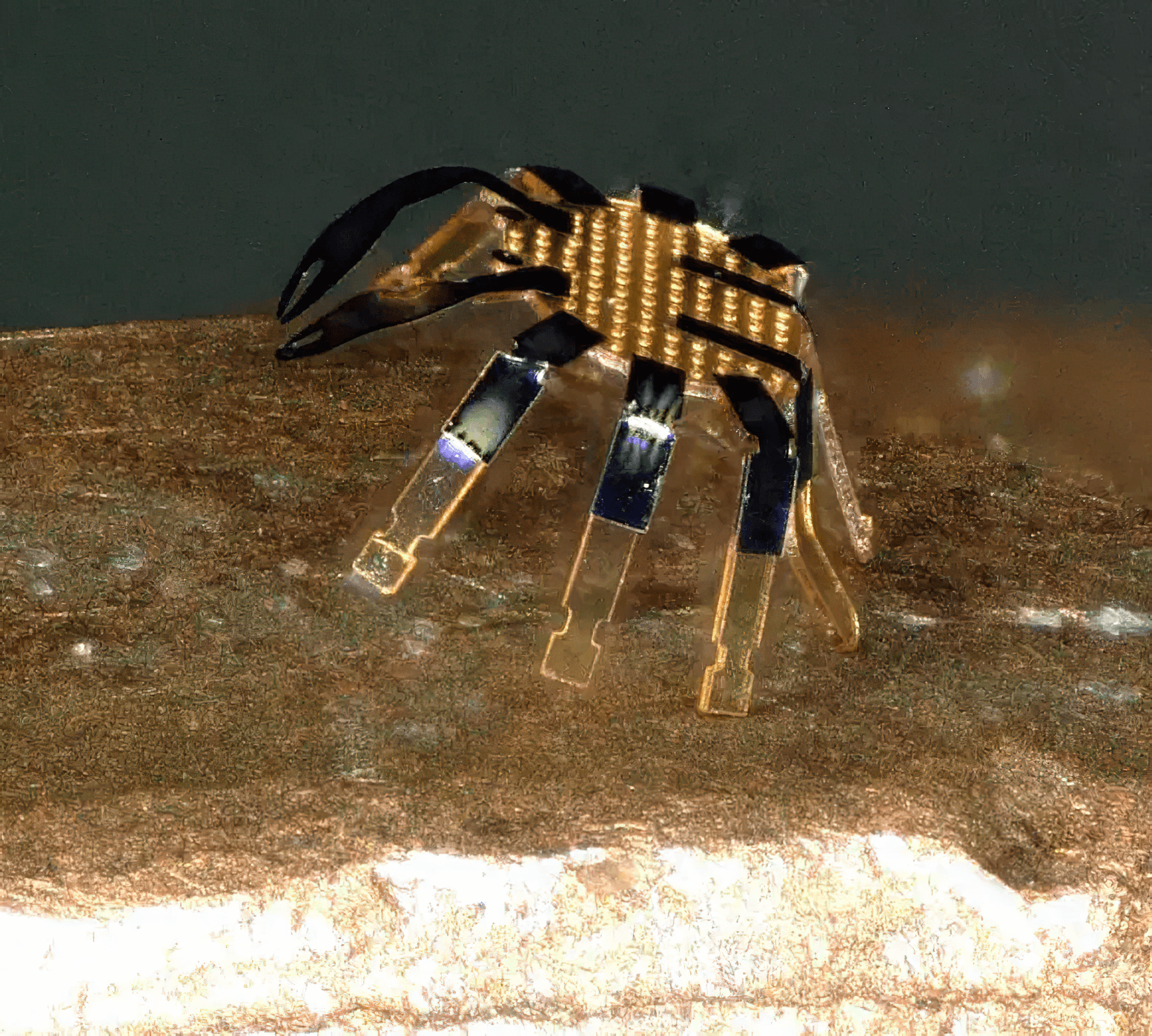
Introducing the caterpillar robot – a curious creature that’s part machine and part nature.

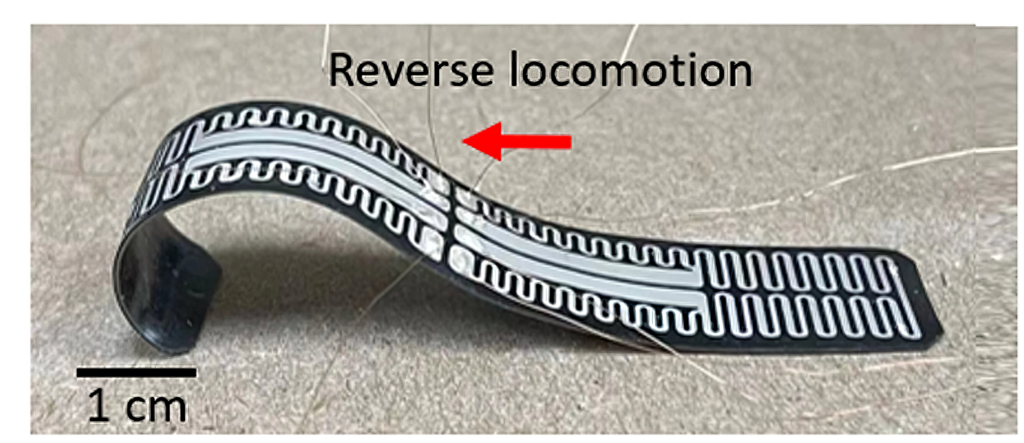
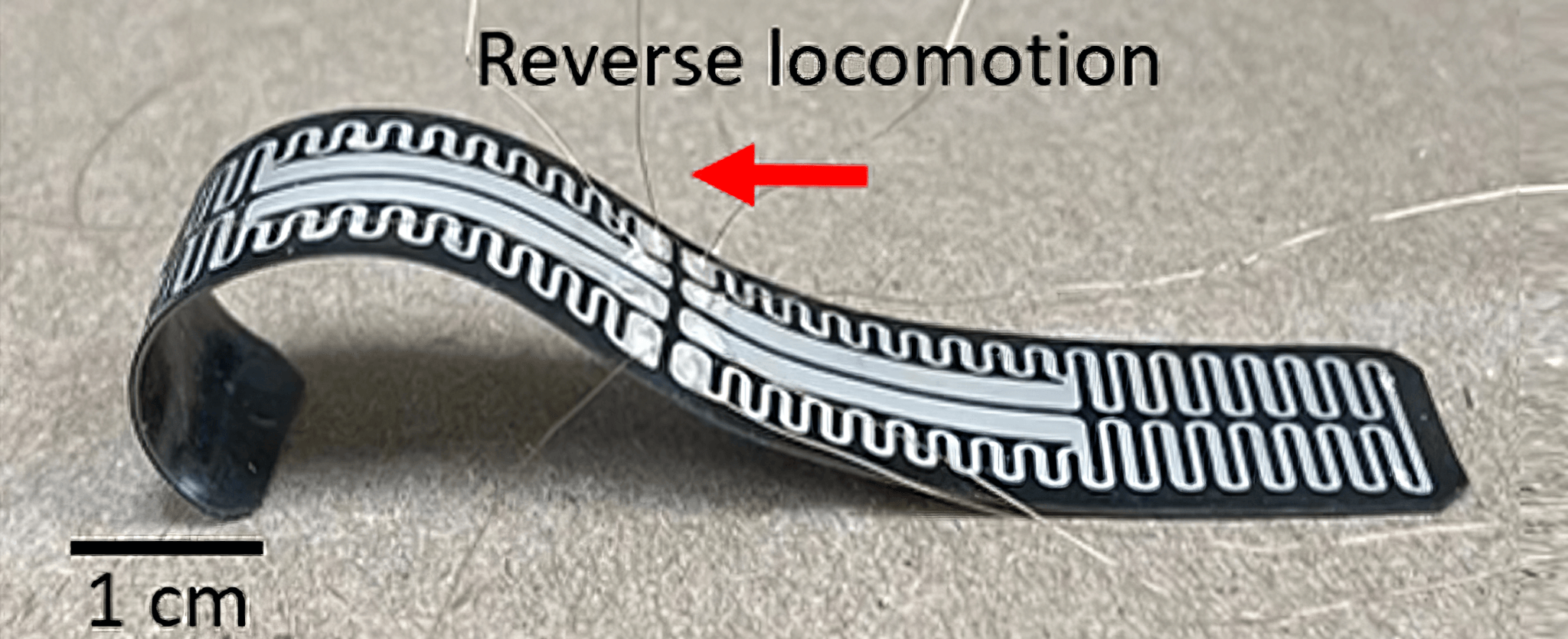
The caterpillar robot is built with a flexible, soft body made from silicone and carbon fiber. This gives it agile mobility that mimics natural caterpillars but can also be programmed to move differently.

It has sensors that allow it to perceive its environment and react accordingly. It can sense light, temperature, humidity, and other environmental conditions.

The caterpillar robot has many potential applications in robotics research. The medical field could explore difficult-to-reach areas of the human body or help assist in delicate surgeries.

In manufacturing, they could help assemble items with precision and tender care. And in exploration, they could traverse rugged terrain or explore areas difficult for humans to access.

The caterpillar robot is still a work in progress, but its potential applications make it an exciting and promising area of research. With further development, this kind of soft robotics technology could revolutionize how robots interact with the world.

There are no limits to the potential of this technology – and who knows what kinds of amazing things it could help us to achieve in the future?

Hazardous materials teams can use this device to inspect dangerous environments, such as nuclear power plants or chemical processing sites. Rigid frames may limit traditional robots and need more dexterity.

Healthcare professionals can use this to perform delicate procedures or provide long-term patient care. It could also find use in search and rescue efforts, providing an invaluable tool to help locate missing persons quickly.

The caterpillar robot’s versatile design and soft body can solve various challenging tasks and scenarios.

The caterpillar robot has the potential to redefine the way we interact with the world, bringing us closer to a future where robots are no longer limited by their size and form factor. With its unique features, this robot will impact many areas rapidly.

A robot like this can move on uneven surfaces and up walls; its body consists of flexible materials. Furthermore, it can carry a payload and adapt to changing conditions.

With advances in computing, sensors, and materials, robotics transforms how humans interact with the environment. Not only is it simplifying our lives, but it is also so advanced that we often won’t even see these devices.

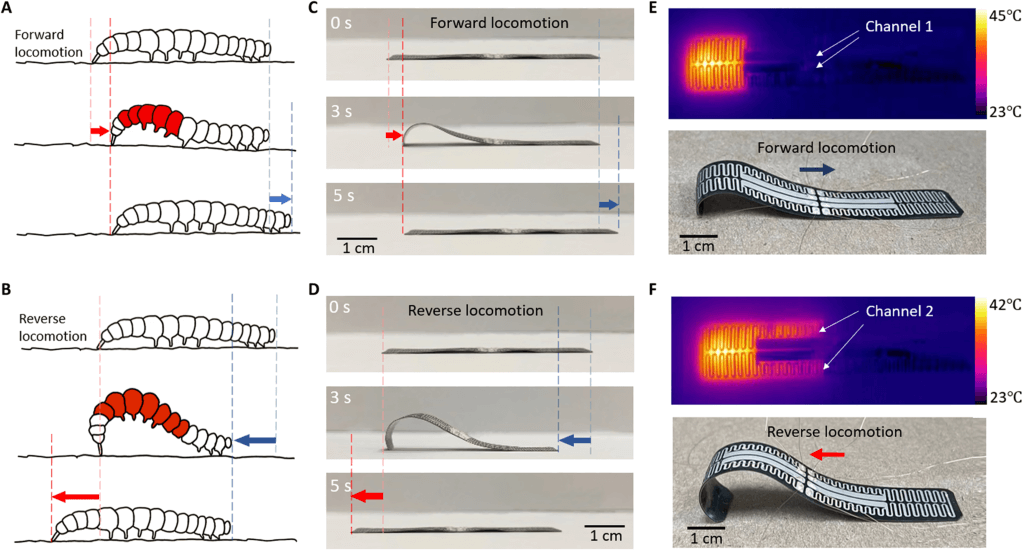
These soft caterpillar robots have heat mechanisms and movement strategies offering thermally responsive materials providing unprecedented capabilities enacting these devices to move.

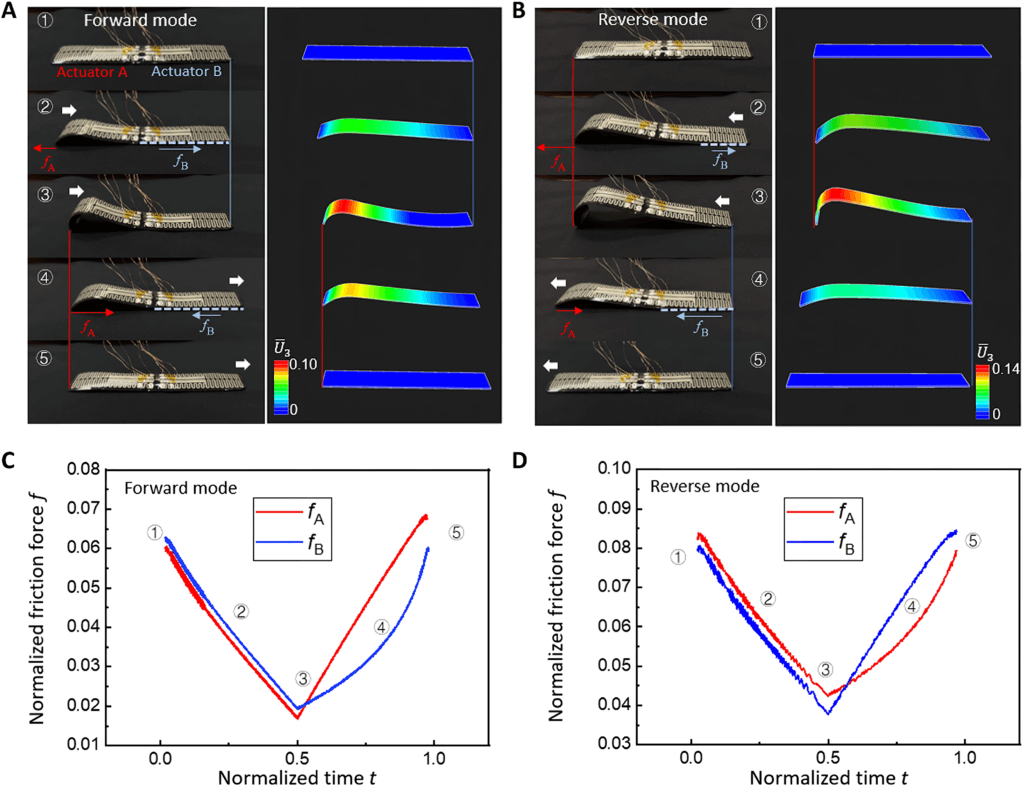
A thermal bimorph allows for predicting and optimizing the local curvature of the robot when under thermal stimulation. Crawling will enable you to pass obstacles and explore bidirectional motion through narrow spaces.

The robots’ locomotion abilities enhance mobility, autonomy, and compatibility by distributing heat throughout the device.

While caterpillar kinematics involves more sophisticated active control of the body parts at different segments, a caterpillar-inspired crawling robot that can control the local curvature of the body could mimic the same two-directional movement, which is critical.

Most crawling robots up until now showed simple bending motion with constant curvature. But scientific advancement has advanced the development of crawling robots into ones with more movement and flexibility.

Research and development of soft robots could improve outcomes in complex tasks such as manipulating delicate objects and exploring extreme environments. With advancements like this, realizing a future with more efficient, safer, and easier-to-use robotic systems is essential.

These innovators combine technology with other intelligent materials to create novel integrated systems capable of rapid and reliable operations.

The possibilities of robots as a solution to many problems still need to be explored. Still, we are just beginning to learn how they can simplify life and improve the human condition by providing many solutions.

As technology advances, engineering will continue to push the boundaries of what is possible in various fields, from driving cars to performing surgery.

We can all be inspired by what soft robotics can achieve and look forward to further exploring its potential.

And just like a caterpillar transforms into a butterfly, science can change our lives into more innovative, efficient, and even more capable ones for many years.